
Bodh Gaya in Bihar is where Siddhartha Gautama sat down under a peepal tree,
resolved not to rise until he understood the cause of suffering, and became the Buddha. Of all
the places connected with his life, this is the one Buddhists call the navel of the earth. If
you make only one pilgrimage in your lifetime, this is the place people come to.
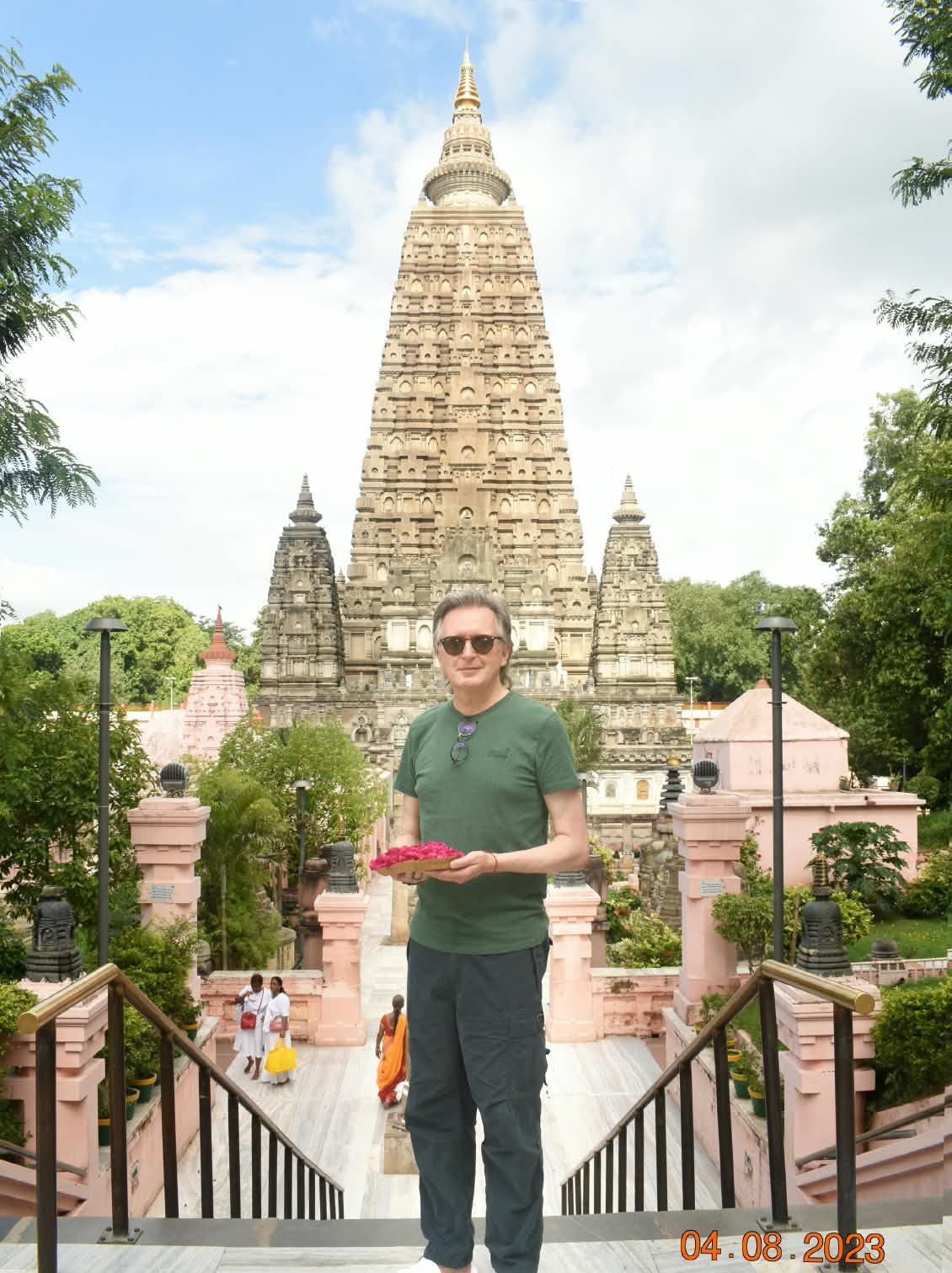
Why Bodh Gaya matters
The Buddha’s enlightenment is the event the whole of Buddhism rests on, and it happened here.
Everything else — the first sermon at Sarnath, forty-five years of teaching, the final
passing at Kushinagar — follows from what took place under this tree. Emperor Ashoka came
on pilgrimage around 250 BCE, built a shrine on the spot and set the stone Vajrasana, the Diamond
Throne, where the Buddha is believed to have been seated. The brick temple you see now is later,
from the Gupta period of the fifth and sixth centuries CE, and it is one of the oldest brick
buildings still standing in India.
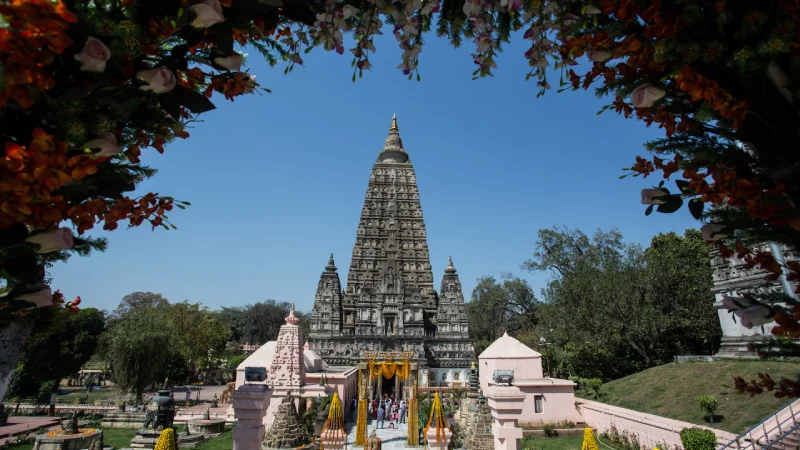
The Mahabodhi Temple Complex was inscribed on the UNESCO World Heritage List in 2002. The
protected area is small — 4.86 hectares — which surprises visitors who expect
something sprawling. It is a dense, quiet, intensely used place rather than a monument you
walk around.
What to see in Bodh Gaya
| Place | What it is | Time needed |
|---|---|---|
| Mahabodhi Temple and the Bodhi Tree | The enlightenment site. The Vajrasana sits between the temple and the tree. Pilgrims circumambulate, prostrate and sit through the day. | 2–3 hours, best at dawn |
| The seven sacred spots | The Buddha is said to have spent seven weeks in the area after his enlightenment. Animeshlochana Chaitya, the Jewel Walk, Ratnaghara Chaitya, the Ajapala Nigrodha and Rajayatana trees and Mucalinda Lake are all inside or beside the complex. | Within the temple visit |
| The Great Buddha Statue | A seated Buddha about 25 metres (80 feet) high, dedicated in 1989. | 30 minutes |
| International monasteries | Thailand, Japan, Bhutan, Tibet, Myanmar, Vietnam, China and others have each built a temple here in their own national style. Walking between them is the easiest way to see how differently Buddhism is practised across Asia. | Half a day |
| Dungeshwari (Mahakala) Caves | About 12 kilometres away, in the hills where the Buddha practised severe austerities for six years before abandoning them. | Half a day including travel |
| Sujata Stupa, Bakraur | Across the Falgu river, marking the house of the village girl who offered him milk-rice and ended his fasting. | 1 hour |
Bodh Gaya at a glance
| Detail | |
|---|---|
| State | Bihar, India |
| River | The Niranjana, also called the Phalgu or Falgu |
| UNESCO status | World Heritage Site since 2002 |
| Nearest airport | Gaya (GAY), about 15 km |
| Nearest railway | Gaya Junction, about 16 km |
| From Patna | About 115 km |
| From Varanasi | About 250 km by road, 5 to 6 hours |
| From Rajgir | About 75 km |
| Nights we recommend | 2 minimum |
| Best season | October to March |
How to reach Bodh Gaya
Gaya airport is the direct route, and in the pilgrimage season it carries international
flights from Southeast Asia. Those flights are seasonal and the airlines change them year to
year, so we confirm what is actually operating on your dates before we build an itinerary
around a flight.
By train, Gaya Junction is on the main Delhi–Kolkata line and well served. By road from
Varanasi it is five to six hours on national highway, which is the leg most pilgrim groups
take. Patna airport is the alternative when Gaya has nothing suitable.
Best time to visit Bodh Gaya
October to March is the season. December and January bring the largest crowds, because this
is when Tibetan, Thai and other Asian groups arrive and major teachings are held; the atmosphere
is extraordinary and the hotels are full. October, February and March are calmer and the weather
is still comfortable. April to June is very hot, and the monsoon from July to September makes
road travel slow.
Things we will tell you honestly
- Bodh Gaya is a small town built around one temple. Visitors expecting a city are disappointed; visitors expecting a place of practice are not.
- The temple complex is busiest between mid-morning and late afternoon. The reason we push for two nights is so you get one dawn there.
- Rules on phones, cameras and bags at the Mahabodhi complex are enforced and they change. We will tell you the current position before you walk in.
- Road quality between Bodh Gaya and the Uttar Pradesh sites is tiring for older travellers. For groups with elderly pilgrims we often split a long leg or use a train for part of it.
- In peak season good rooms in Bodh Gaya sell out months ahead. Booking late limits your choice, not your price.
Frequently asked questions about Bodh Gaya
Why is Bodh Gaya the most important Buddhist site?
Because it is where the Buddha stopped being Siddhartha Gautama. Lumbini is where he was born, Sarnath where he first taught and Kushinagar where he died, but Bodh Gaya is where the enlightenment itself happened. For most Buddhist traditions that makes it the single most sacred place on earth.
Is the Bodhi Tree the original tree?
No, and nobody claims it is. The tree standing beside the Mahabodhi Temple today is a descendant of the original, grown from a cutting of that lineage. The spot is the original spot.
How many days do I need in Bodh Gaya?
Two nights is the honest minimum. One night lets you see the Mahabodhi Temple and little else. Two nights gives you a dawn sitting under the Bodhi Tree when the complex is quiet, the international monasteries, and the Dungeshwari caves or the Sujata Stupa across the river.
Can I meditate inside the Mahabodhi Temple complex?
Yes. Pilgrims sit and meditate in the complex every day, and early morning is the calmest time. Security is strict and the rules about phones and cameras change from time to time, so your guide will tell you what you can carry in on the day rather than guessing in advance.
Which airport is closest to Bodh Gaya?
Gaya airport, roughly 15 kilometres away. It has international flights in the pilgrimage season, but the schedule changes every year, so we check live availability for your dates instead of promising a flight that may not be running.
What is the best time of year to visit Bodh Gaya?
October to March. December and January are the busiest months, when Tibetan and Southeast Asian groups arrive and senior teachers give teachings. If you want quiet, come in October or late February.
The other sacred sites on the Buddhist Circuit
Sarnath · Kushinagar · Lumbini · Rajgir & Nalanda
All five are usually travelled together. Our Buddhist Circuit tour from Varanasi, 7-night tour from Bodh Gaya and 10-night India and Nepal pilgrimage each cover a different combination. Temple groups and monastic parties are handled separately on our group pilgrimage page.
Plan your visit to Bodh Gaya with Travel Ocean
Travel Ocean is a tour company based in Varanasi. We have been taking pilgrim groups
and private families through these places for twelve years, which means we know the
driving times, the quiet hours at each monument and the practical problems before they
happen. Tell us your dates, how many people are travelling and where you want to start,
and we will send you a written plan and a written price. Nothing is charged until you
have both in front of you.
Call or WhatsApp +91 9648542487 |
Landline 0542-2282063 |
Email abhishek@traveloceanindia.com
Office hours 9:00 to 17:00, Monday to Saturday.